Personal Loans
How to Get Your Finances Ready for a Big Life Decision


Some decisions change everything.
Buying a home, starting a family, moving into a new career, making a major purchase, or planning for retirement all mark a real turning point, and they all have one thing in common: your finances sit right at the heart of them. Getting your money in good shape before you commit does not just make the decision easier, it gives you more options and the confidence to move when the time is right.
This guide walks through the practical groundwork, whatever big step you are weighing up.
Big decisions start with your finances
It is tempting to focus on the decision itself and leave the money side until later. In practice, the opposite works better. When your finances are in order, you can act on an opportunity rather than watch it slip by, negotiate from a position of strength, and avoid the stress of scrambling to make the numbers work at the last minute.
Think of it as laying the foundations. The earlier you start, the more room you give yourself to shape the outcome, whether that means saving a little more, borrowing on better terms, or simply knowing what is realistic before you set your heart on something.
Get a clear picture of where you stand
Before anything else, it helps to know your true starting point. That means taking an honest look at your income, your regular outgoings, what you have in savings, and any debts you are carrying. It is not always a comfortable exercise, but a clear baseline is the single most useful thing you can have when a big decision is on the table.
Once it is all written down, patterns tend to jump out. You might spot spending you can redirect towards a goal, or realise you are in a stronger position than you thought. Either way, you are no longer guessing, and that clarity makes every following step easier.
Build, or check, your safety net
Life rarely runs exactly to plan, so a financial cushion matters more than ever when you are about to make a big commitment. A good rule of thumb is to keep enough in accessible savings to cover three to six months of essential outgoings, so that an unexpected cost or a change in income does not immediately knock your plans off course.
If your safety net is not quite there yet, it is worth building it up before you take on a major commitment rather than after. Having that buffer in place means you can move forward knowing you are not stretched to the very edge, which is a far more comfortable place from which to make any big decision.
Understand and tidy your credit
If your big decision is likely to involve borrowing, and many are, your credit history will play a part. Lenders use it to decide whether to lend to you and on what terms, so a little attention here can make a real difference to what is available to you and how much it costs.
The good news is that strengthening your credit is often straightforward. Making sure you are on the electoral roll, keeping up with existing repayments, avoiding new credit in the run-up to a big application, and correcting any errors on your file all help. Give yourself a few months where you can, because improvements take a little time to show through.
Know your borrowing position
For many big decisions, borrowing is part of the plan, and knowing what you could realistically borrow shapes what is actually within reach. If you are buying a home, a mortgage is likely to be central, and getting an early sense of what you could borrow tells you what kind of property is in your budget before you start looking.
For other big steps, different types of lending come into play. A personal loan can be a straightforward way to fund a one-off cost such as a wedding, a new car, or home improvements, spread over a manageable term. For larger sums, a secured loan, borrowed against your home, can fund a significant purchase or project, often at a lower rate because the lender has the reassurance of security, though it does mean your home is at stake if you cannot keep up repayments. Understanding which route fits your plans, and what each would cost, is a key part of getting ready.
Plan for the change, not just the moment
It is easy to focus on the upfront cost of a big decision and overlook how it changes your finances from then on. A new home brings ongoing running costs, a growing family reshapes your monthly budget, and a career change might mean a different or less predictable income. The decision is not just the moment you commit, it is everything that follows.
So it pays to look beyond day one. Sketch out what your budget will look like once the change has happened, not just what it takes to get there. Building that longer view into your planning is what turns a big decision from a leap into a considered, confident step.
Talk it through before you commit
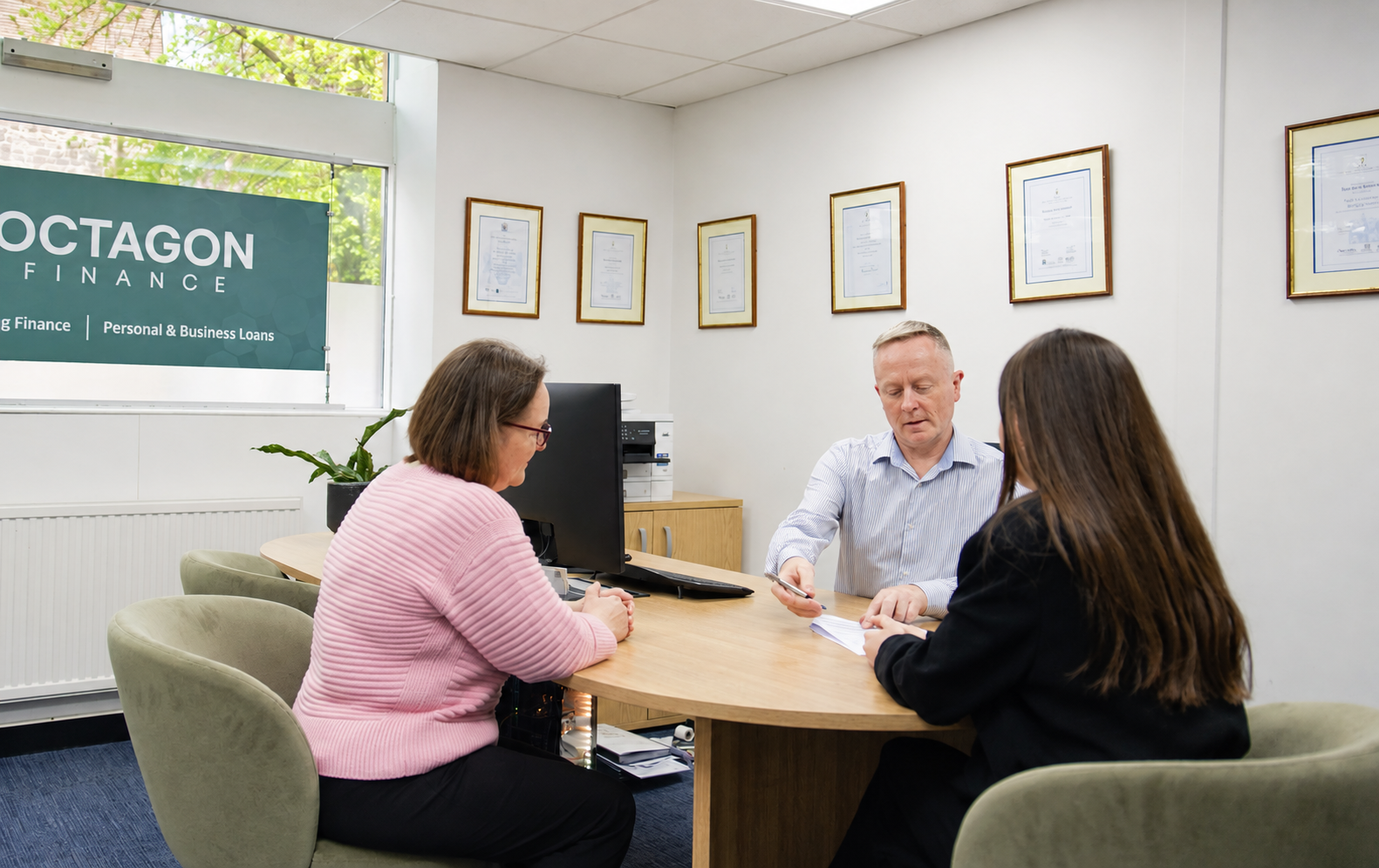
You do not have to work all of this out on your own. A conversation with someone who understands the numbers can help you see where you stand, what your options are, and how to get the financial groundwork right before you commit to anything.
Whether your next big step involves a mortgage, a personal loan, or borrowing for a major purchase, the team at Octagon Finance can help you prepare and find the option that fits. Come and speak to us at 3 Mulcaster Street, St Helier, give us a call on 01534 744900, or get in touch here. Whatever you are planning, we will help you approach it with confidence.
This article is intended as general information and does not constitute personalised financial advice. For guidance based on your own circumstances, please speak to a qualified adviser.
Your property or home may be repossessed if you do not keep up repayments on your mortgage. All mortgages are subject to status and eligibility criteria.